
If you told me three years ago that I’d be wearing a tiny AI recorder on my shirt collar and a health-tracking ring on my finger — and actually liking both — I would’ve laughed. But here we are. The AI wearable space has gone from novelty to genuinely useful, and 2026 is the year where these gadgets finally deserve a spot in your daily carry.
I’ve been testing the latest crop of AI wearables, and I want to walk you through the ones that are actually worth your money — not the overhyped vaporware, but the devices that solve real problems you didn’t know you had.
AI Wearables Are Finally Useful — Here’s What Changed
The first wave of AI wearables was rough. Remember the Humane AI Pin? A $700 chest-mounted projector that nobody asked for. Or the early smart glasses that weighed as much as ski goggles and died after two hours.
What changed in 2026 comes down to three things: battery life got dramatically better, on-device AI processing caught up to the cloud, and manufacturers finally stopped trying to replace your phone. The best AI wearables now complement what you already carry. They handle one or two tasks exceptionally well instead of trying to be everything at once.
That shift in philosophy makes all the difference. These aren’t gadgets looking for a problem — they’re solutions to friction you deal with every day.
Plaud NotePin S — Your Meetings, Transcribed Automatically
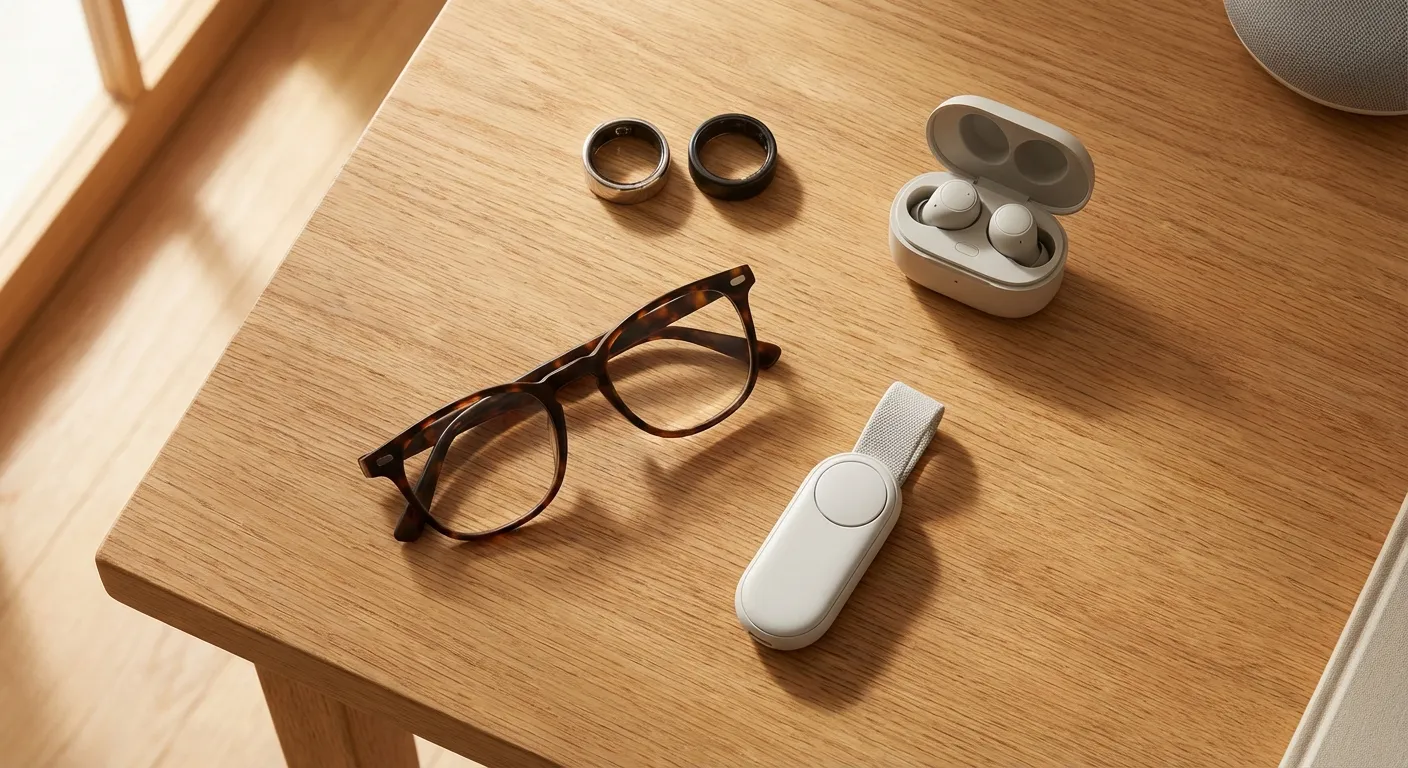
The Plaud NotePin S is the device I reach for most. It’s a tiny capsule — roughly the size of a thick coin — that clips to your collar, hangs from a lanyard, or attaches magnetically to your shirt. Press the button, and it records everything. When you’re done, it transcribes and summarizes your conversation using AI, supporting 112 languages.
At $179, it sits in that sweet spot where it’s affordable enough to impulse-buy but good enough to become indispensable. The 64GB of onboard storage means you’re not running out of space anytime soon, and the tactile record button on the S model is a huge improvement over the original NotePin’s pressure-sensitive controls that sometimes misfired.
Where the NotePin S really shines is spontaneous conversations. Meetings are obvious, but I’ve used it during doctor appointments, parent-teacher conferences, and brainstorming walks where pulling out a phone would kill the vibe. The transcription accuracy is solid — not perfect, but good enough that you can search your notes later and find what you need.
The catch? Plaud’s AI features require a subscription after the trial period. The free tier handles basic transcription, but summaries, mind maps, and advanced features need the Pro plan. It’s not a dealbreaker, but worth knowing upfront.
Rokid AI Glasses Style — All-Day AI on Your Face
Smart glasses have been the “next big thing” for a decade, but the Rokid AI Glasses Style might be the first pair I’d actually wear outside the house. At just 38.5 grams, they’re lighter than most regular sunglasses. That’s not marketing fluff — you genuinely forget they’re there.
Rokid accomplished this by ditching the display entirely. These are screenless AI glasses, which sounds like a limitation until you realize it’s the reason they last 12 hours on a charge and don’t look like a prop from a bad sci-fi movie. What you get instead is a 12MP Sony camera for 4K video, open-ear speakers, and AI assistants you can talk to hands-free — including ChatGPT, DeepSeek, and real-time translation.
At $299, the Style undercuts Meta’s Ray-Ban smart glasses while offering prescription lens support through Rokid’s online platform (prescriptions up to plus or minus 15.00D, with delivery in 7-10 days). The dual-chip architecture — NXP RT600 for always-on voice, Qualcomm AR1 for heavy lifting — keeps things responsive without torching your battery.
The best use case? Content creators will love the 10-minute continuous recording in multiple aspect ratios (including 9:16 for vertical video). For everyone else, the real-time translation alone justifies the price if you travel.

Smart Rings — Health Tracking Without the Bulk
If you’re tired of chunky fitness watches, smart rings are the move. The category has matured fast, and you’ve got three strong options depending on your ecosystem and budget.
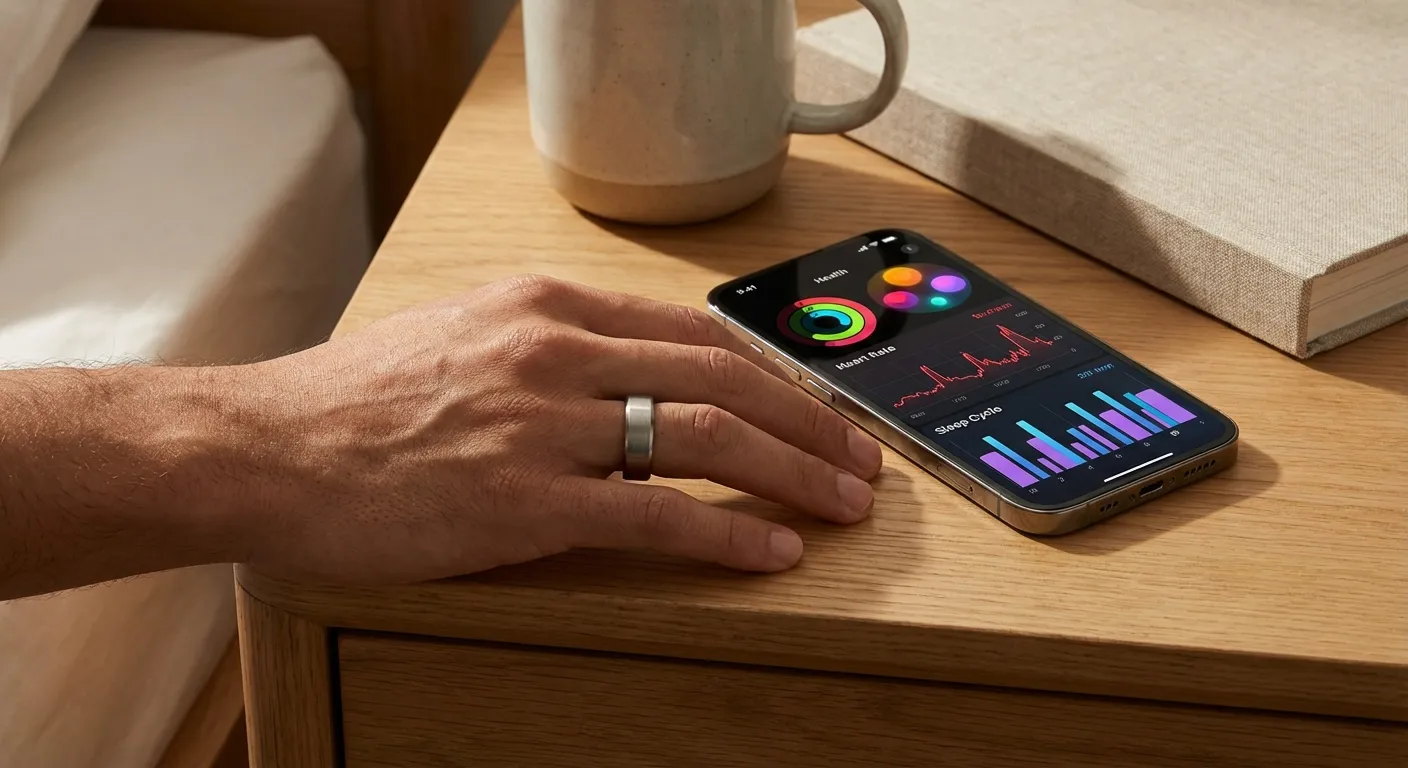
Oura Ring 4 is still the gold standard. The Oura Ring 4 delivers best-in-class sleep tracking, heart rate variability monitoring, and readiness scores in a sleek titanium package. The Gen 4 hardware improved sensor accuracy significantly, and the app is the most polished in the category. The downside is the $5.99/month subscription required to access most features beyond basic tracking. Available in multiple finishes starting around $349.
RingConn Gen 2 is the value pick. The RingConn Gen 2 offers no-subscription health tracking with 12-day battery life and IP68 water resistance rated to 100 meters. You get sleep, stress, heart rate, blood oxygen, and women’s health tracking without paying a monthly fee — ever. At around $199, it’s the best bang-for-buck smart ring you can buy. The newer Gen 2 Air model slims things down to just 2mm and 2.5 grams if comfort is your top priority.
Samsung Galaxy Ring makes sense if you’re deep in the Samsung ecosystem. The Galaxy Ring integrates seamlessly with Samsung Health and Galaxy devices, and Samsung doesn’t charge a subscription fee. It’s been hovering around $280 on sale (down from $400), which makes it competitive. The trade-off is that non-Samsung phone users won’t get the full experience.
My pick? RingConn Gen 2 for most people. No subscription, long battery life, and it just works. Oura if you want the absolute best sleep data and don’t mind the monthly fee.
NODBOT and Bedside AI Companions
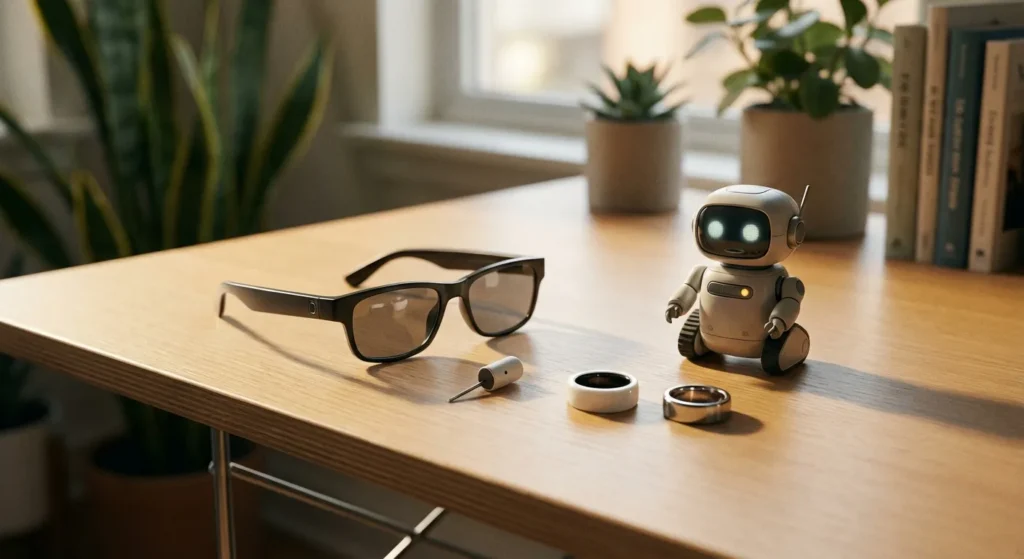
CES 2026 was overflowing with AI companion devices — little desktop robots that listen, talk, and try to be your buddy. The category is exploding, with products like EMO (a ChatGPT-powered desk robot around $279), Loona, and various bedside companions designed to provide ambient AI interaction without a screen.
These companions sit on your nightstand or desk and handle things like morning briefings, ambient soundscapes, smart home control, and casual conversation. Some use camera-based presence detection to greet you when you walk in. Others focus purely on voice interaction.
Here’s my honest take: the technology works, but the value proposition is still shaky for most people. If you already have a smart speaker, a bedside AI companion is a lateral move at best. Where they start to make sense is for people who live alone and want a more conversational interface than “Hey Siri,” or for elderly family members who’d benefit from a friendly check-in device. The emotional AI angle is interesting, but it’s early.
Are AI Wearables Worth It? (Honest Take)
After months with these devices, here’s where I’ve landed: the best AI wearables are the ones you forget you’re wearing. The Plaud NotePin S disappears on your collar and captures conversations you’d otherwise lose. The Rokid glasses feel like regular sunglasses but give you an AI assistant on demand. Smart rings track your health 24/7 without the wrist-tan line or nightly charging ritual.
The devices that fail are the ones that demand your attention. If an AI wearable needs you to learn new gestures, stare at a tiny projector, or charge it twice a day, it’s dead on arrival — no matter how clever the AI is.
My recommendation: start with one device that solves a specific problem for you. If you’re in a lot of meetings, grab the NotePin S. If you want passive health tracking, get a smart ring. Don’t try to go full cyborg on day one.
FAQ
Do AI wearables need a phone to work?
Most do, at least for setup and syncing data. The Plaud NotePin S records independently but needs the phone app for transcription. Smart rings sync health data to companion apps. The Rokid glasses can handle some tasks standalone but work best paired with your phone.
Are smart ring subscriptions worth paying for?
It depends on the ring. Oura’s subscription unlocks genuinely useful insights that justify the cost if you’re serious about sleep and recovery data. But RingConn and Samsung prove you can get solid health tracking with no monthly fee. If subscriptions bug you on principle, skip Oura.
How accurate are AI wearable transcriptions?
The Plaud NotePin S hits roughly 90-95% accuracy in clear environments with one or two speakers. Accuracy drops in noisy rooms, heavy accents, or group conversations with crosstalk. It’s good enough for meeting notes and personal reference — but I wouldn’t rely on it for legal transcription.
Will AI glasses replace AR glasses?
Not exactly. Screenless AI glasses like the Rokid Style and AR display glasses like the Rokid Max 2 serve different purposes. AI glasses prioritize all-day comfort and voice interaction. AR glasses prioritize visual overlays and immersive content. Eventually they’ll merge, but in 2026, you’re choosing between comfort and capability.