
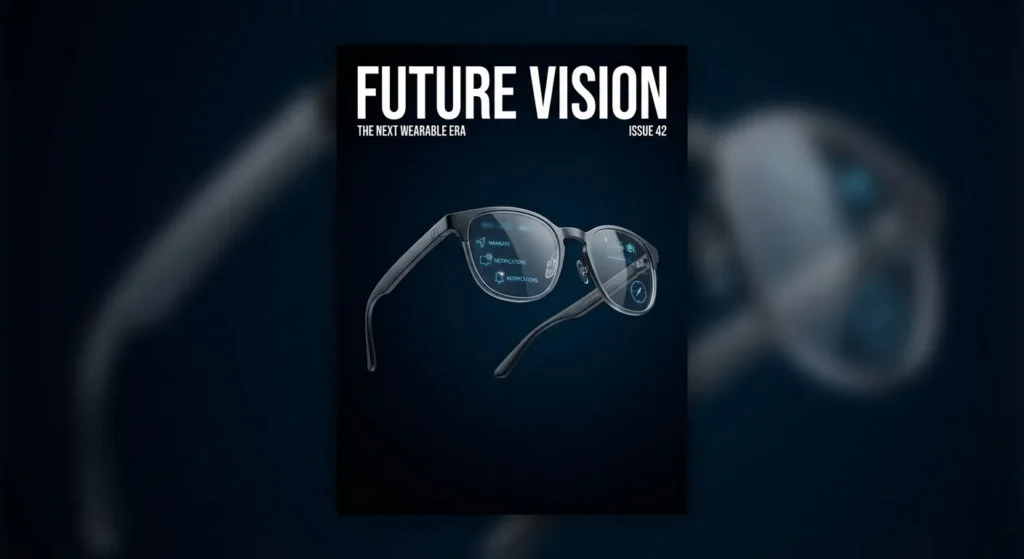
You’re on a flight, laptop screen crammed against the seat in front of you, the person next to you keeps glancing at your screen, and you’ve got three hours of work (or a movie) ahead of you. Now imagine putting on a pair of lightweight glasses and having a 170-inch display floating in front of you — private, immersive, and completely portable.
That’s the pitch for AR glasses in 2026, and for the first time, the technology actually delivers on it. CES 2026 was packed with AR eyewear, but three models stood out from the crowd: the Xreal One Pro, the Rokid AR Lite, and the RayNeo Air 4 Pro. Each one takes a different approach to price, display quality, and features.
We tested all three. Here’s how they compare and which one you should buy.

What Are AR Display Glasses?
Before we dive in — these aren’t the chunky VR headsets you’re thinking of. AR display glasses look like slightly oversized sunglasses. They use tiny Micro-OLED screens to project a virtual display in front of your eyes. Think of it as a giant floating monitor that only you can see.
You plug them into your phone, laptop, Steam Deck, or Nintendo Switch 2 via USB-C and instantly get a massive virtual screen. No setup. No tracking cameras. Just plug and watch (or work).
Common uses:
– Watching movies and shows on planes or in bed
– Gaming on Steam Deck, ROG Ally, or Switch 2
– Working with a virtual monitor from your laptop
– Private screen time anywhere
Xreal One Pro — Best All-Around AR Glasses
Price: $599 | Weight: 82g | Resolution: 1080p per eye | FOV: 57° | Refresh Rate: 120Hz
The Xreal One Pro is the one to beat in 2026. It packs Xreal’s custom X1 spatial computing chip that gives you 3DoF (three degrees of freedom) head tracking with just 3ms of motion-to-photon latency. In plain English: the virtual screen stays perfectly locked in space when you move your head. No wobble, no lag, no nausea.
What Makes It Great
- Sony Micro-OLED displays — 1080p per eye at 120Hz. The image is sharp and smooth, whether you’re watching a movie or gaming.
- Bose-tuned speakers — Built into the arms. They’re surprisingly good for glasses speakers, with clear dialogue and enough bass for casual listening.
- Electrochromic dimming — Three transparency modes: Theater (blocks outside light), Shade (tinted like sunglasses), and Clear (see-through). This is a killer feature on planes.
- 57° field of view — Equivalent to a 171-inch screen. You can push it to a 310-inch ultra-wide virtual display in Follow Mode.
- 3DoF spatial tracking — The screen stays anchored in space (Anchor Mode) or follows your gaze (Follow Mode). This is what separates the One Pro from cheaper glasses.
What Could Be Better
- At 82g, it’s comfortable for an hour or two but you’ll notice the weight on longer sessions.
- No built-in battery — powered by whatever you plug into.
- The $599 price is a real commitment if you’re not sure you’ll use them daily.
Best For
The Xreal One Pro is the best choice if you want one pair of AR glasses that does everything well — work, movies, and gaming. The spatial tracking and electrochromic dimming make it the clear pick for frequent flyers and remote workers.
Buy the Xreal One Pro if: You want the best overall experience and don’t mind paying for it. Check current price on Amazon
Rokid AR Lite — Best Display and Audio Quality
Price: $749 | Weight: 75g (glasses) + Station 2 | Resolution: 1200p per eye | FOV: 50° | Refresh Rate: 120Hz
The Rokid AR Lite takes a different approach. The glasses themselves are incredibly light at just 75g, but the computing power lives in a separate puck called the Rokid Station 2 (powered by a Snapdragon 6 Gen 1 chip). You clip the Station to your pocket or set it on a table, and it connects to the glasses via cable.
What Makes It Great
- Best picture quality in its class — The 0.68-inch Sony Micro-OLED panels run at 1200p per eye with 600 nits of brightness. Colors are richer and more saturated than the Xreal. If you’re a visual quality nerd, this is the one.
- HiFi-level audio — Rokid went all-in on speakers. The sound quality is noticeably better than both the Xreal and RayNeo, with more depth and spatial presence.
- 300-inch virtual screen — The giant-screen mode is impressive for movie watching.
- Myopia adjustment — Built-in diopter adjustment means glasses wearers don’t need prescription inserts.
- 5,000mAh battery in Station 2 — The separate compute unit has its own battery, so it won’t drain your phone.
What Could Be Better
- The two-piece design (glasses + Station 2) is less convenient than a single cable to your phone. More stuff to carry.
- 50° FOV is smaller than the Xreal’s 57°. You’ll notice the difference.
- At $749, it’s the most expensive option here.
- No electrochromic dimming — you’re stuck with tinted lenses.
Best For
The Rokid AR Lite is for people who prioritize picture and sound quality above everything else. If you’re buying AR glasses primarily for watching movies and shows, the Rokid’s display and audio are genuinely the best available.
Buy the Rokid AR Lite if: You want the best visual and audio experience and don’t mind the two-piece setup.
RayNeo Air 4 Pro — Best Budget AR Glasses
Price: $299 | Weight: 76g | Resolution: 1080p per eye (3840×1080 in 3D) | FOV: ~46° | Refresh Rate: 120Hz
The RayNeo Air 4 Pro is the surprise of 2026. At $299, it undercuts the Xreal by $300 and the Rokid by $450 — and it doesn’t feel like a budget product. RayNeo made this the world’s first consumer AR glasses with HDR10 certification, and it shows.
What Makes It Great
- HDR10 with 1,200 nits brightness — This is the brightest display in this comparison. The HDR10 support means over 1 billion colors with a 200,000:1 contrast ratio. Dark scenes in movies actually look dark.
- Bang & Olufsen tuned audio — Four-speaker setup with sound tube fittings that reduce sound leakage by 80%. You get spatial audio with Whisper mode (private) and Surround mode (immersive).
- 76g and comfortable — Adjustable nose pads and lightweight frame. Easily the most comfortable for extended wear.
- Magnetic prescription lens inserts — Snap-on system for glasses wearers. Clean and easy.
- SDR-to-HDR upscaling and 2D-to-3D conversion — The built-in Pixelworks Vision 4000 chip upscales standard content to HDR and can convert 2D content to 3D. It actually works reasonably well.
- $299 — This is the real headline. At this price, you can try AR glasses without a major financial commitment.
What Could Be Better
- No spatial computing or head tracking — the screen moves with your head rather than staying fixed in space. Fine for movies, less ideal for productivity.
- No built-in battery — powered entirely by the connected device. It draws about 15% per hour from a phone.
- Smaller FOV than the Xreal One Pro.
Best For
The RayNeo Air 4 Pro is the best entry point into AR glasses and the best value by a wide margin. If you want to game on your Steam Deck with a giant HDR screen, watch movies on flights, or just try AR glasses without spending $600+, this is the one.
Buy the RayNeo Air 4 Pro if: You want great visuals at the best price, and you don’t need spatial tracking.
Side-by-Side Comparison
| Feature | Xreal One Pro | Rokid AR Lite | RayNeo Air 4 Pro |
|---|---|---|---|
| Price | $599 | $749 | $299 |
| Weight | 82g | 75g (+Station 2) | 76g |
| Resolution | 1080p/eye | 1200p/eye | 1080p/eye (HDR10) |
| Refresh Rate | 120Hz | 120Hz | 120Hz |
| FOV | 57° | 50° | ~46° |
| Brightness | 700 nits | 600 nits | 1,200 nits |
| Spatial Tracking | 3DoF (X1 chip) | 3DoF (Station 2) | None |
| Audio | Bose-tuned | HiFi (best) | B&O 4-speaker |
| HDR | No | No | HDR10 certified |
| Dimming | Electrochromic (3 modes) | Tinted | Adjustable brightness |
| Prescription | IPD sizing (M/L) | Built-in myopia dial | Magnetic inserts |
| Virtual Screen | Up to 310” | Up to 300” | Up to 201” |
| Battery | None (USB-C powered) | 5,000mAh (Station 2) | None (USB-C powered) |
| Best For | All-around use | Picture/sound quality | Budget / HDR gaming |
Which AR Glasses Should You Buy?
Here’s the short version:
- You want the best all-rounder: Get the Xreal One Pro ($599). Spatial tracking, electrochromic dimming, great display, and Bose audio. It does everything well and nothing poorly.
- You want the best picture and sound, period: Get the Rokid AR Lite ($749). The 1200p display and HiFi speakers are in a class of their own. Just know you’re carrying the Station 2 puck.
- You want to try AR glasses without breaking the bank: Get the RayNeo Air 4 Pro ($299). HDR10, 1,200 nits, B&O audio, 76g — at half the price of the Xreal. This is the one we’d recommend to anyone who’s AR-curious.
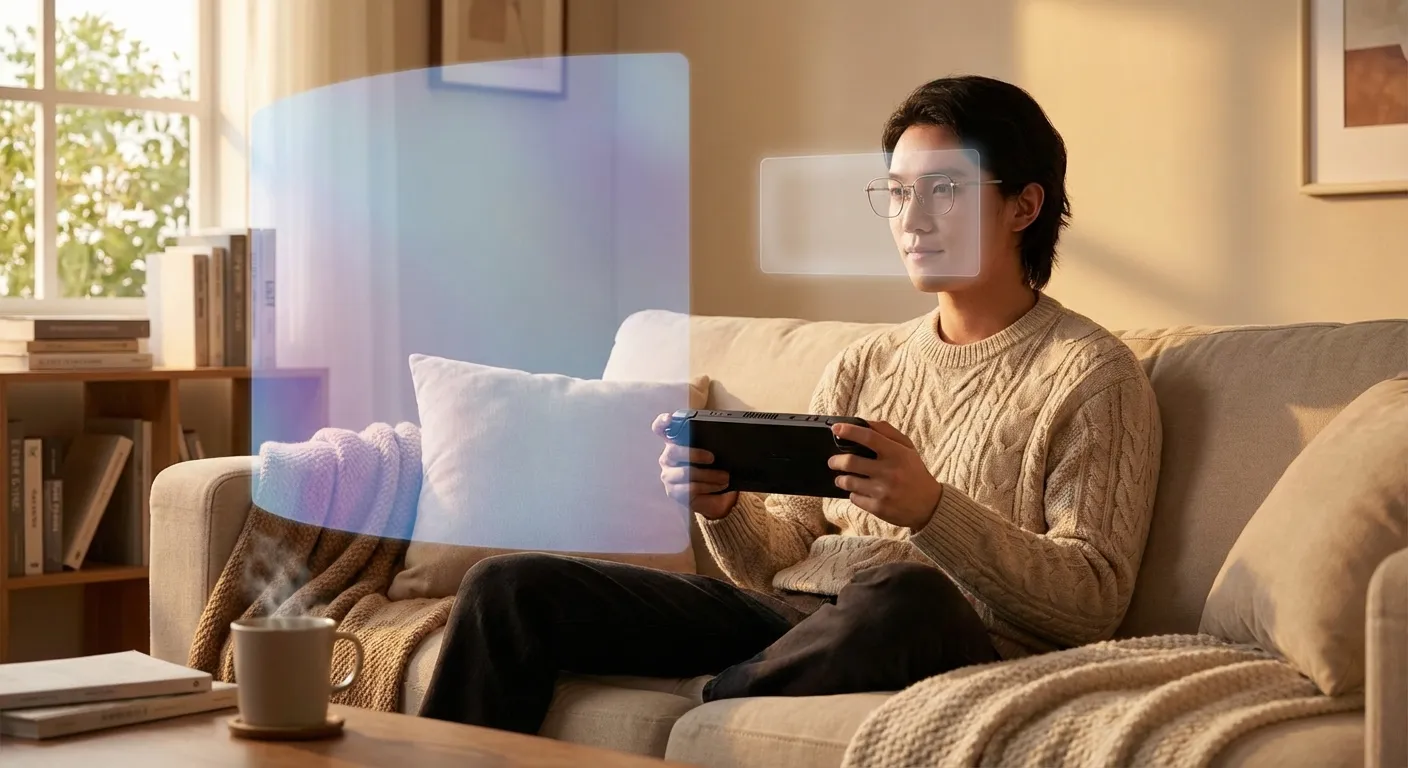
- You’re a gamer (Steam Deck / Switch 2 / ROG Ally): The RayNeo’s HDR10 and brightness make it the best for gaming. The Xreal One Pro is a close second if you want spatial tracking.
- You fly a lot for work: Xreal One Pro, no contest. The electrochromic dimming and anchored display mode were designed for exactly this use case.
No matter which one you pick, you’re getting something that would’ve been science fiction five years ago — a private, giant-screen display that fits in a glasses case. 2026 is genuinely the year AR glasses went from “cool demo” to “I use this every day.”
Frequently Asked Questions
Do AR glasses work with iPhones?
Yes. All three models connect via USB-C and work with iPhone 15 and newer (which have USB-C). The Xreal One Pro has particularly good iOS support with dedicated app features. Older iPhones with Lightning ports are not compatible.
Can I use AR glasses if I wear prescription glasses?
Each brand handles this differently. The Xreal One Pro comes in two IPD sizes (M and L) and offers optional prescription inserts. The Rokid AR Lite has a built-in myopia adjustment dial — no inserts needed. The RayNeo Air 4 Pro uses a magnetic snap-on prescription lens system. All three have solutions, but the Rokid is the most convenient for glasses wearers.
Do AR glasses cause eye strain or motion sickness?
Most people can use them comfortably for 1-2 hours without issues. The Xreal One Pro’s 3ms latency spatial tracking actually helps reduce motion sickness compared to glasses without tracking. Taking breaks every hour is a good idea, just like with any screen. The high refresh rates (120Hz on all three) also help reduce eye fatigue compared to older models.
Are AR glasses worth it for gaming?
Absolutely — this is one of the best use cases. Plugging a Steam Deck or Nintendo Switch 2 into any of these glasses gives you the equivalent of a 130-200 inch screen. The RayNeo Air 4 Pro’s HDR10 support makes games look incredible, and at $299 it’s cheaper than a good portable monitor. The Xreal One Pro adds spatial tracking so the screen stays fixed while you shift on the couch.
How do AR display glasses compare to VR headsets like the Meta Quest?
They’re fundamentally different products. VR headsets are heavier (300-500g), fully enclosed, and designed for immersive virtual environments and games. AR display glasses are lightweight (75-82g), look like sunglasses, and function as a private portable monitor. You wouldn’t play Beat Saber on AR glasses, and you wouldn’t wear a Quest on a plane for 4 hours. They complement each other rather than compete.